


Preparing Materials Before Bulk Cutting
Fibrena Underwear prepares fabrics, waistbands, sewing thread, labels and other order-specific materials before boxer briefs, trunks, briefs and boxer shorts enter bulk cutting.
Material preparation follows the approved sample and confirmed production specification. The order reference should identify the fabric composition, GSM, color, width, stretch, recovery, waistband, labels, quantity and size breakdown.
This stage is used to identify visible material differences and specification issues before they affect cutting and sewing. It does not replace buyer-required laboratory testing or confirm performance claims that have not been included in the approved specification.
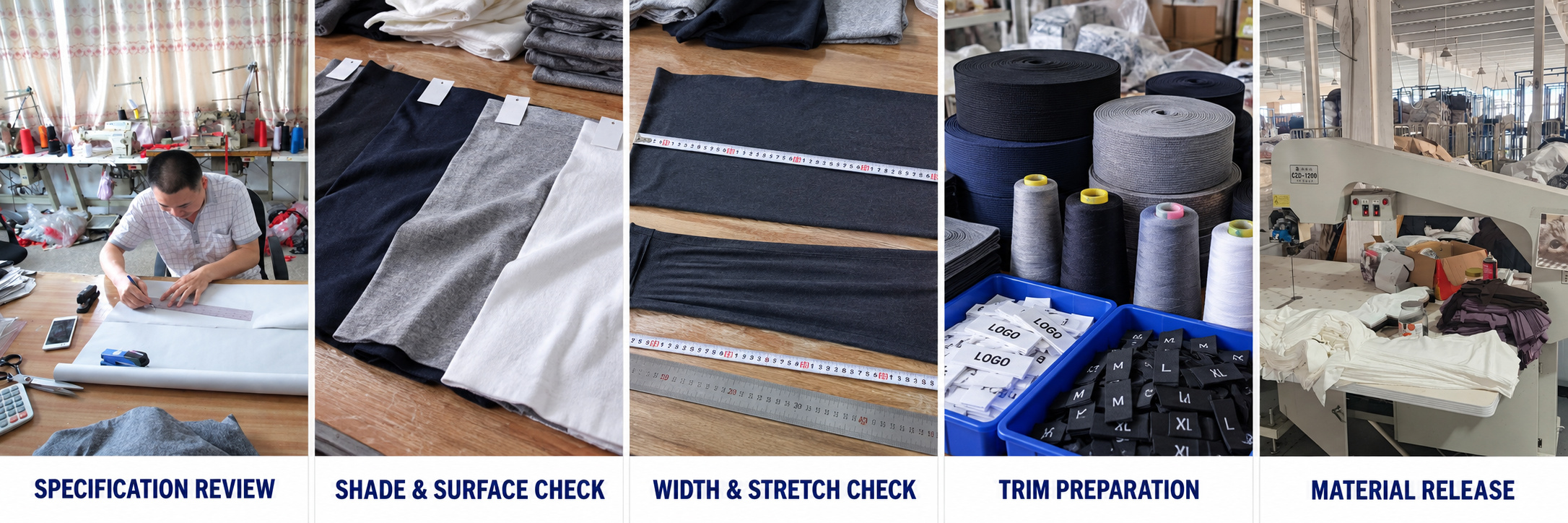 Fabric Specification Review
The material requirement is reviewed before fabric is allocated to production. Depending on the project, the specification may cover:
- Fiber composition
- Fabric construction
- GSM or weight range
- Fabric width
- Color reference
- Hand feel
- Stretch and recovery
- Opacity
- Shrinkage requirements
- Intended underwear style
General descriptions such as “soft,” “lightweight” or “high stretch” can be interpreted differently. A physical fabric swatch, approved garment sample or measurable material specification provides a clearer reference for sourcing and production.
Cotton, modal, bamboo-derived cellulose, ice-silk and polyester/spandex fabrics have different handling and performance characteristics. Buyers can review the main sourcing factors on our Custom Fabric & Material Selection page.
Incoming Fabric Inspection
Incoming fabric is identified against the purchase and production requirements before cutting. Checks may include roll or batch information, color, shade, width, hand feel, stretch and visible surface condition.
The inspection team checks for applicable visible issues such as:
- Stains or marks
- Holes
- Uneven coloration
- Knitting defects
- Damaged fabric edges
- Unusual surface texture
- Shade differences between batches
Materials showing an obvious difference from the approved reference should be separated for review. Shade grouping is particularly important when different panels will be cut separately and assembled into one finished garment.
The inspection scope depends on the fabric type, order requirement and agreed quality plan. Visual incoming inspection should not be described as laboratory verification.
Fabric Relaxation and Batch Control
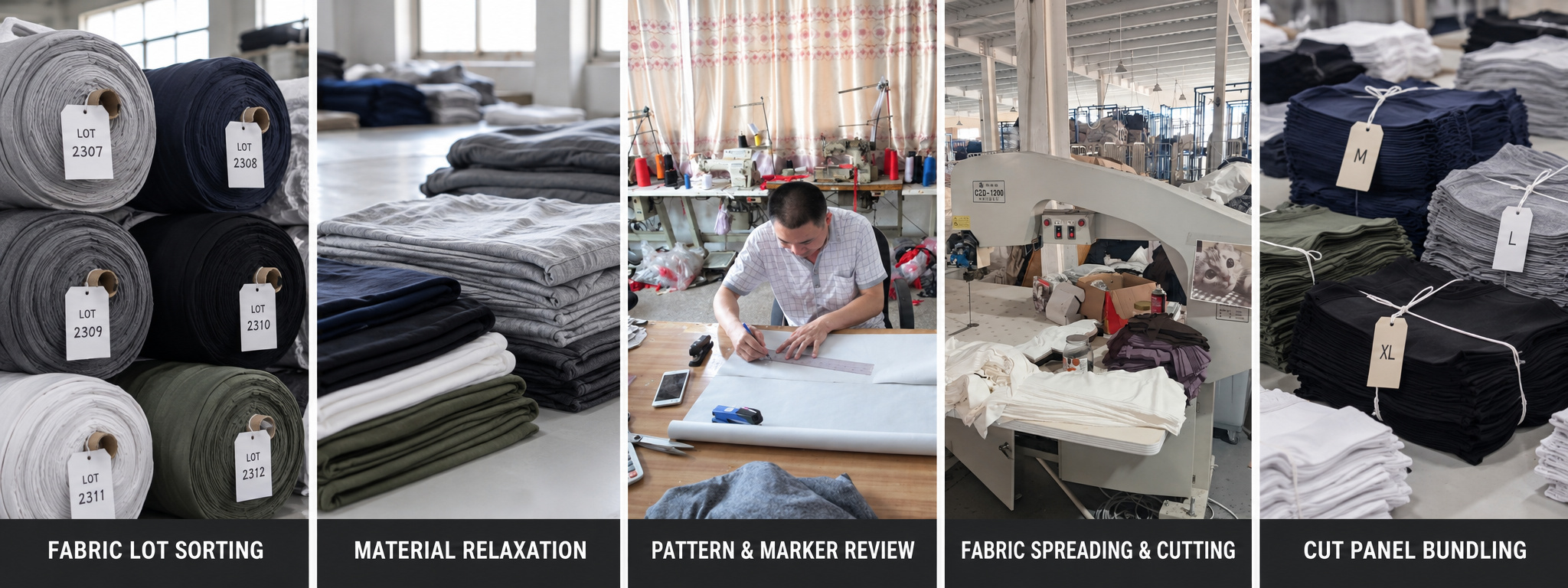
Stretch knitted fabrics can change after they are unwound or removed from compact storage. Where required, fabric is allowed to relax before cutting so that tension introduced during rolling, packing and transport can reduce.
Fabric batches and colors are kept identifiable during preparation. Mixing visibly different shades within one garment can affect the finished appearance, especially on solid-color boxer briefs, trunks and briefs.
If a new fabric lot differs from the approved sample in color, hand feel, stretch or surface appearance, the difference should be reviewed before bulk cutting. Unapproved material substitutions can affect fit, sewing performance, finished measurements and repeat-order consistency.
Material Allocation for Production
Fabric is allocated according to the confirmed style, color, size breakdown and production quantity. The team reviews whether the available material supports the planned order and considers expected cutting consumption.
Projects containing several colors, multiple fabrics or a wide size range require clear allocation before spreading and cutting. Material rolls, cut panels and production bundles should remain identifiable by order, style, color and size.
Custom-dyed fabrics or buyer-specific blends may have separate material MOQs. Their availability and preparation time can affect the final garment MOQ, sample schedule and bulk production lead time.
Waistbands, Labels and Sewing Trims
Material preparation also covers the components required to assemble and identify the garment:
- Elastic waistbands
- Sewing and overlock thread
- Main labels
- Care labels
- Size labels
- Hangtags where required
- Packaging identification materials
Custom waistbands are reviewed for width, color, Logo direction, repeat layout and general elasticity. A waistband that differs in stretch or width from the approved sample can change both the appearance and finished waist measurement.
Labels are compared with the buyer-approved content, size information and placement requirement. Fiber composition, care instructions, country-of-origin wording and other market-specific information should be approved by the buyer before bulk label production.
Branding and identification materials should not be released to production until the artwork and garment specification have been confirmed.
 Testing Requirements
Visual inspection and specification review do not confirm every technical property. When required by the buyer or destination market, testing can be coordinated for:
- Fiber composition
- Fabric weight
- Color fastness
- Shrinkage
- Dimensional stability
- Pilling
- Elastic recovery
Testing requirements should be submitted before sampling or order confirmation. Sample preparation, laboratory scheduling and reporting may affect cost and lead time.
Buyer-nominated or qualified third-party laboratories can be coordinated when required. Test methods, acceptance criteria and report requirements should be confirmed for the specific product and market. More information is available on our Quality Inspection & Testing page.
Material Release for Cutting
Materials are released to cutting after the required order references, visible checks and component information have been reviewed. The cutting team receives the confirmed pattern, size plan, material allocation and production quantity.
Fabric spreading, marker arrangement, panel direction, cutting and cut-part separation are handled during the next manufacturing stage. These operations are explained on our Cutting & Panel Processing page.