


Production Starts with an Approved Specification
Fibrena Underwear manufactures boxer briefs, trunks, briefs and boxer shorts for private label brands, importers, wholesalers, retail chains and e-commerce buyers. Available programs include cotton, modal, bamboo-derived cellulose, ice-silk and polyester/spandex underwear.
Bulk production begins after the sample, material specification, size chart, colors, waistband, labels, packaging and order breakdown have been confirmed. The approved sample and written specification are used together as the production reference.
Starting production without complete approval can create differences in fit, measurements, branding or packing. Any changes requested after materials have been prepared or cut may also affect cost and delivery time.
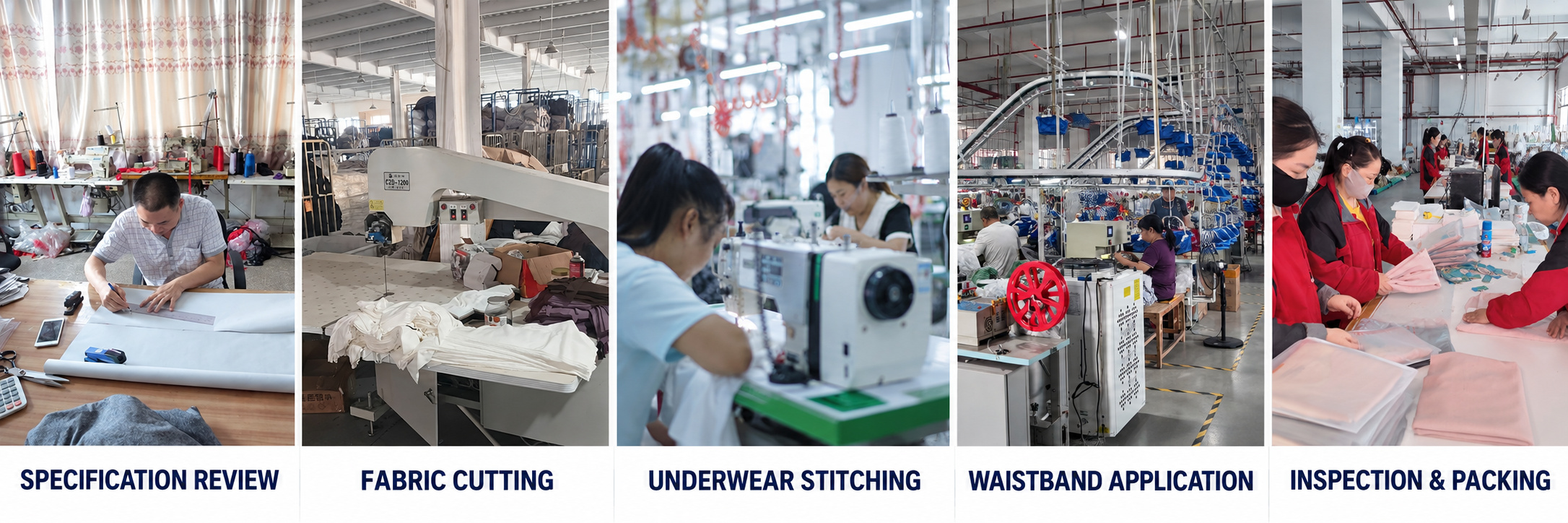 Step 1: Material and Trim Preparation
Incoming fabric is reviewed against the approved order reference. Depending on the project, checks may cover composition, GSM, width, shade, hand feel, stretch, recovery and visible defects.
Waistbands, sewing thread, main labels, care labels, size labels and packaging materials are matched to the approved artwork and order requirements. Fabric may be relaxed before cutting when required by the material.
Laboratory testing is not automatically included with every order. Fabric composition, color fastness, shrinkage or dimensional stability testing can be coordinated when requested. More information is available on our Fabric Inspection & Material Preparation page.
Step 2: Pattern Review and Cutting
The production team checks the confirmed pattern, size grading and measurement chart before bulk cutting. Marker arrangement and fabric direction are planned according to the garment construction and material characteristics.
Fabric is spread and cut into the required front, back, pouch and gusset panels. Cut components are then separated by style, color and size before sewing. Panel shape, direction and matching are checked to reduce assembly errors and finished measurement variation.
Buyer-specific fits should be approved before this stage because pattern changes after cutting can result in material loss and production delays.
Step 3: Sewing and Garment Assembly
Sewing methods are selected according to the approved style, seam structure and fabric stretch. Industrial sewing, overlock and flatlock equipment may be used where required.
Typical assembly work includes:
- Pouch and front-panel construction
- Front and back panel joining
- Gusset assembly where applicable
- Side or center seams
- Leg opening finishing
- Label attachment
- Reinforcement and thread trimming
In-line checks focus on seam type, stitching consistency, skipped stitches, puckering, panel alignment and general workmanship. The detailed assembly sequence is explained on our Sewing & Assembly Process page.
Step 4: Waistband Application
The waistband is prepared according to its confirmed width, color, elasticity and Logo artwork. Joining position and Logo orientation are reviewed before attachment.
During application, the elastic must be distributed evenly around the garment. Uneven tension can cause waistband twisting, puckering or differences in the finished waist measurement. Inspection therefore covers alignment, attachment stitching, joining condition, stretch and recovery.
Custom waistbands may have a separate MOQ and preparation period. Their specification should be approved during sampling rather than after bulk sewing has started.
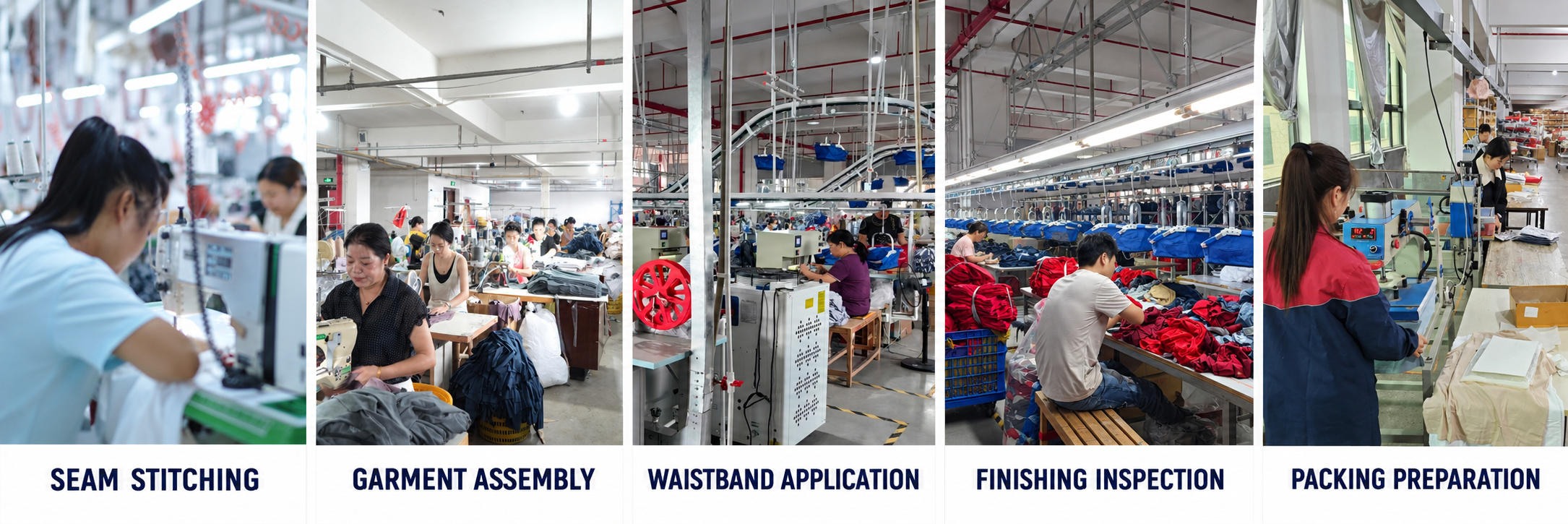 Step 5: Finishing and Quality Inspection
Finished garments are trimmed, arranged and compared with the approved sample. Key measurements may include waist, hip, rise, side length and leg opening according to the buyer’s size chart and agreed tolerance.
Workmanship checks cover:
- Seam appearance and stitching
- Product symmetry
- Waistband alignment and elasticity
- Color and visible fabric condition
- Logo and label position
- General appearance
Needle detection can be applied when required. Buyer-nominated third-party inspection or laboratory testing can also be coordinated. Further details are provided on our Quality Inspection & Testing page.
Step 6: Packing and Shipment Preparation
Approved products are folded and packed according to the confirmed specification. Options may include individual polybags, paper packs, retail boxes, multipacks, barcode labels and size stickers.
Packing checks cover the correct style, size, color, assortment ratio, pieces per carton and shipping marks. Completed cartons are organized in the finished-goods warehouse before shipment.
Standard bulk orders usually require around 25–35 days after sample approval and deposit confirmation. More complex private label programs may require around 35–45 days, depending on materials, construction, branding, packaging and inspection requirements. Export arrangements can be coordinated under EXW, FOB, CIF or DDP terms according to the destination and order conditions.