


Development Begins with the Exact Construction
“Seamless underwear” can describe different product structures. It may refer to garments made with seamless knitting technology or sewn underwear designed with fewer seams, flatlock construction, bonded edges or smooth-finish details. These methods require different materials, equipment, MOQ and development procedures.
Fibrena Underwear reviews each project according to its actual construction rather than treating seamless as a general marketing term. Buyers should provide a tech pack, physical reference sample or clear product photographs showing the inside and outside construction.
If the required structure cannot be confirmed from the initial information, the project must be evaluated before quotation or sample scheduling.
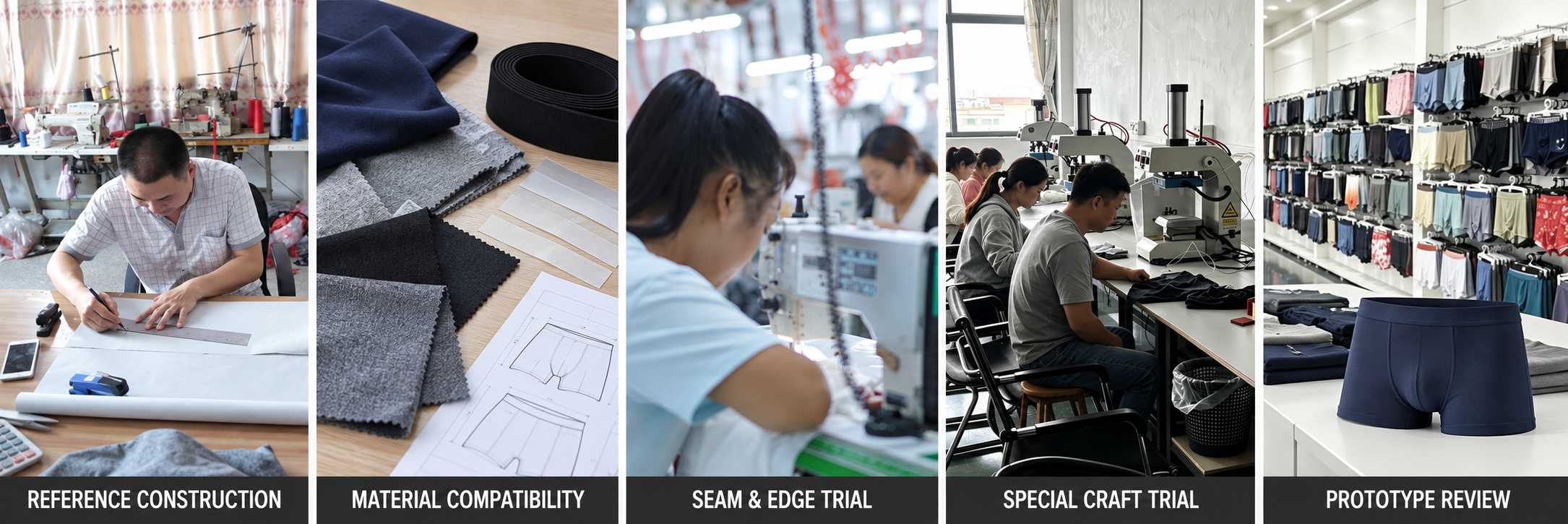 Construction Feasibility Review
The first review identifies how the garment is formed and which operations are required. Important details include:
- Number and shape of body panels
- Pouch and gusset construction
- Side-seam or reduced-seam structure
- Leg-opening finish
- Waistband type and attachment method
- Bonded, flatlock, laser-cut or heat-applied details
- Logo, label and print application
- Required stretch, recovery and finished measurements
Fibrena Underwear’s confirmed production scope includes cutting, sewing, waistband application, finishing and inspection. Projects requiring dedicated seamless-knitting, bonding or other specialized processes are subject to feasibility confirmation. Such capabilities should not be assumed until the reference construction and technical requirements have been reviewed.
Fabric and Trim Compatibility
Special constructions depend heavily on material behavior. Fabric composition, GSM, stretch direction, recovery, surface smoothness and heat sensitivity can influence whether an edge remains flat or a bonded area remains secure.
Cotton, modal and bamboo-derived fabrics may require different handling from polyester/spandex or lightweight fabrics commonly marketed as ice silk. Elastic waistbands, bonding films, labels, printed components and thread must also be compatible with the body fabric.
Material options are reviewed through Custom Fabric & Material Selection before the development method is finalized.
Prototype and Craft Trials
A new construction may require component trials before a complete garment sample is made. For example, the team may review seam appearance, edge flatness, bonding position, logo application or waistband compatibility on the selected fabric.
The first complete sample is checked for fit, comfort-related seam placement, visual balance and dimensional results. Buyers should examine both the external appearance and the internal construction because a smooth outside finish does not automatically confirm stable assembly.
Development timing depends on material availability, the number of technical trials and whether specialized components must be sourced. Standard custom samples usually require around 7–15 days, but special-craft projects are confirmed individually.
The approval sequence is explained in Sample Development & Approval.
Fit and Pre-Production Approval
Reduced seams and special edge finishes can change garment stretch and fit. Buyers should confirm the waist, rise, pouch, leg opening and relevant circumference measurements on the physical sample.
Comments should identify the exact measurement, seam, edge or component that requires modification. After revisions are completed, the approved sample and confirmed specification become the production reference.
Bulk production should not begin while material, construction or fit details remain open.
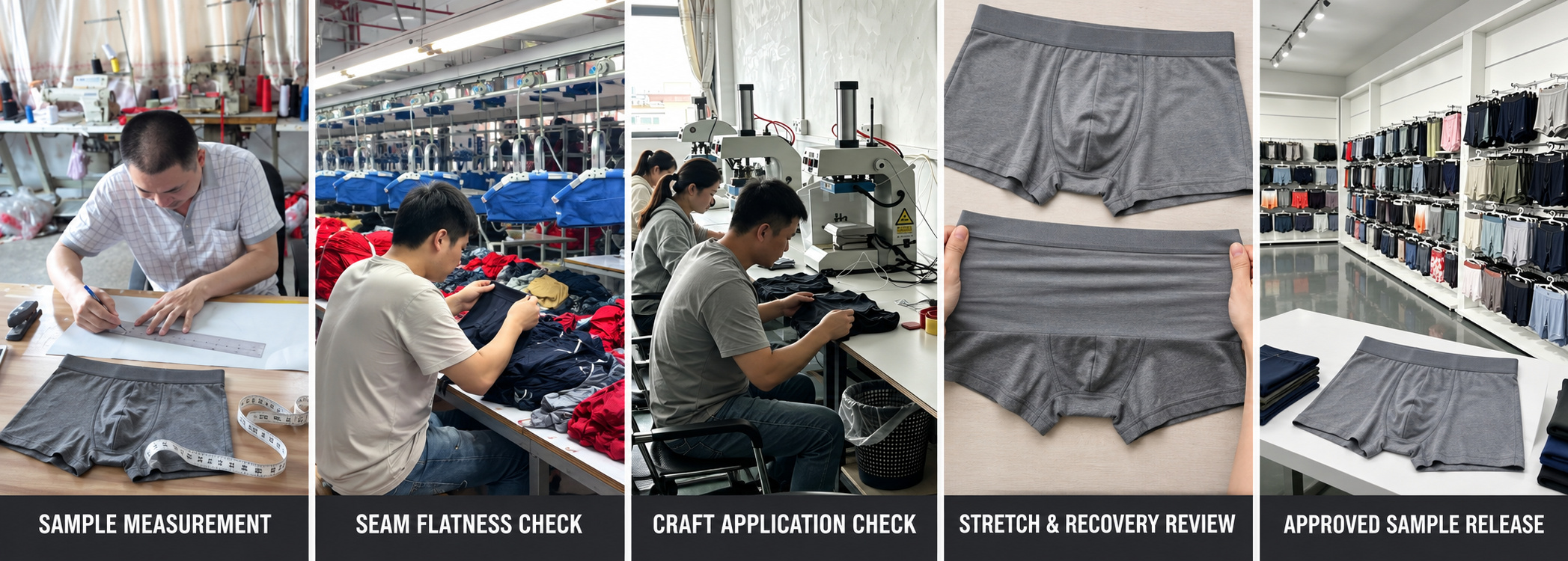 Quality Checks for Special Constructions
Inspection points depend on the approved craft but may include:
- Seam or bonded-edge alignment
- Stretch and recovery after application
- Edge lifting, cracking or separation
- Puckering and surface marks
- Logo position and application quality
- Waistband security and alignment
- Key garment measurements
- Appearance after agreed testing or handling
Finished products are compared with the approved sample and documented requirements through Quality Inspection & Testing.
MOQ, Cost and Quotation Information
MOQ and cost are influenced by fabric minimums, construction trials, special trims, logo methods and order breakdown by style, color and size. Specialized processes may require higher minimum quantities than conventional sewn underwear.
For review, provide the tech pack or reference sample, target fabric, size chart, quantity by color and size, construction details, logo requirements, packaging specification and destination. Fibrena Underwear will assess feasibility, sample requirements, MOQ and production timing before issuing a project-based quotation.