


Cutting Accuracy Starts with an Approved Specification
Cutting converts approved fabric and patterns into production panels for boxer briefs, trunks and briefs. Errors at this stage can affect finished measurements, panel balance, pouch shape, seam alignment and material consumption across the entire bulk order.
Before cutting begins, the production reference should clearly define the fabric composition, GSM, width, color, stretch direction, size range, grading rules and product construction. The approved sample, confirmed size chart and pattern set are used together—not a reference photo alone.
Projects that still require fit adjustment or grading confirmation should complete Custom Size & Fit Development before bulk cutting is released.
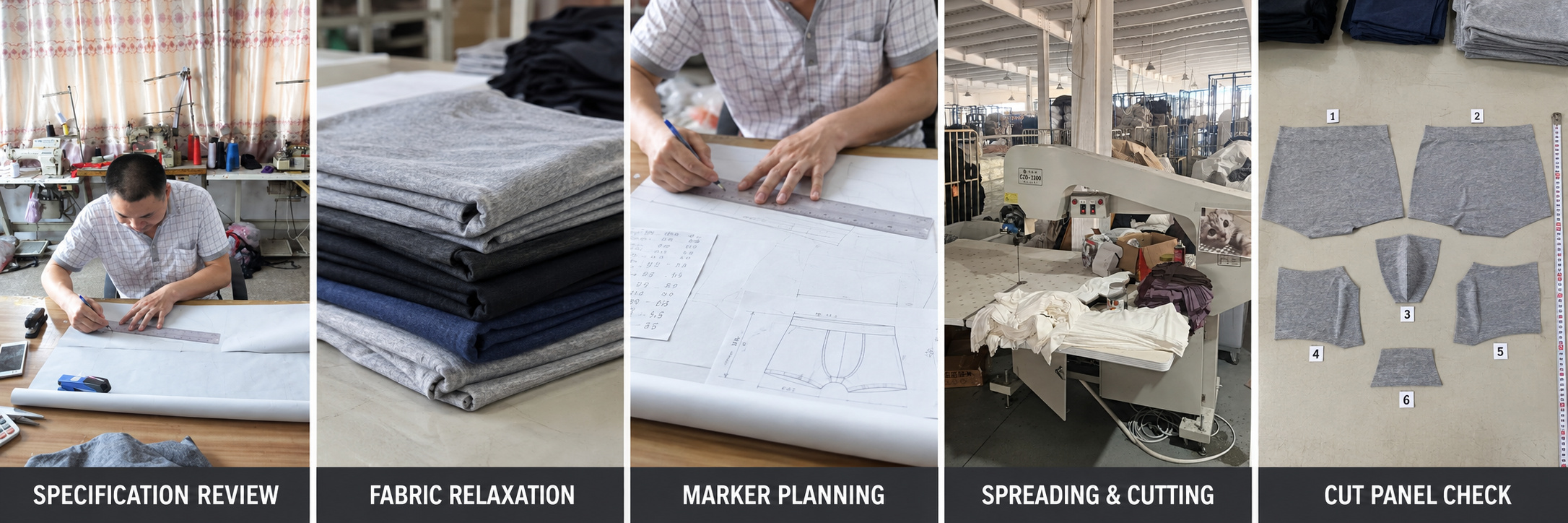 Fabric Relaxation, Shade Control and Spreading
Knitted underwear fabrics may change after being unrolled, transported or stored under tension. Where the fabric and order specification require it, material is allowed to relax before spreading and cutting. This helps reduce avoidable dimensional variation after panels are released from the lay.
Fabric rolls are identified by color and lot before use. Rolls with visible shade differences should not be mixed within the same garment or production bundle. The spreading direction must also respect fabric face, grain, stretch direction and any print or surface orientation.
These controls connect directly with Fabric Inspection & Material Preparation, where fabric width, shade, hand feel and visible defects are reviewed before production use.
Pattern, Marker and Size Review
Patterns are checked against the approved style and size specification before marker planning. For men’s underwear, particular attention is given to the front and back rise, pouch construction, leg opening, side seam, crotch panel and waistband attachment line.
Marker layout must balance material utilization with panel direction and cutting accuracy. Size ratios in the order are also reviewed before the lay is prepared. If a purchase order contains several sizes or colors, the cutting plan should match the confirmed assortment rather than relying on a general production ratio.
Late changes to size grading, panel construction or order breakdown can require revised patterns and marker layouts. Buyers should therefore confirm these details before approving material for bulk cutting.
Cutting and Panel Identification
Fabric is spread according to the planned lay and cut using the appropriate equipment for the material and order volume. Cut edges, notches, matching points and panel shapes are checked so sewing operators can assemble each garment consistently.
After cutting, panels are grouped by style, color, size and production lot. Clear bundle identification reduces the risk of mixing sizes, shades or similar-looking components during sewing. Printed, heat-transfer or other decorated panels may require additional orientation and placement control before they enter assembly.
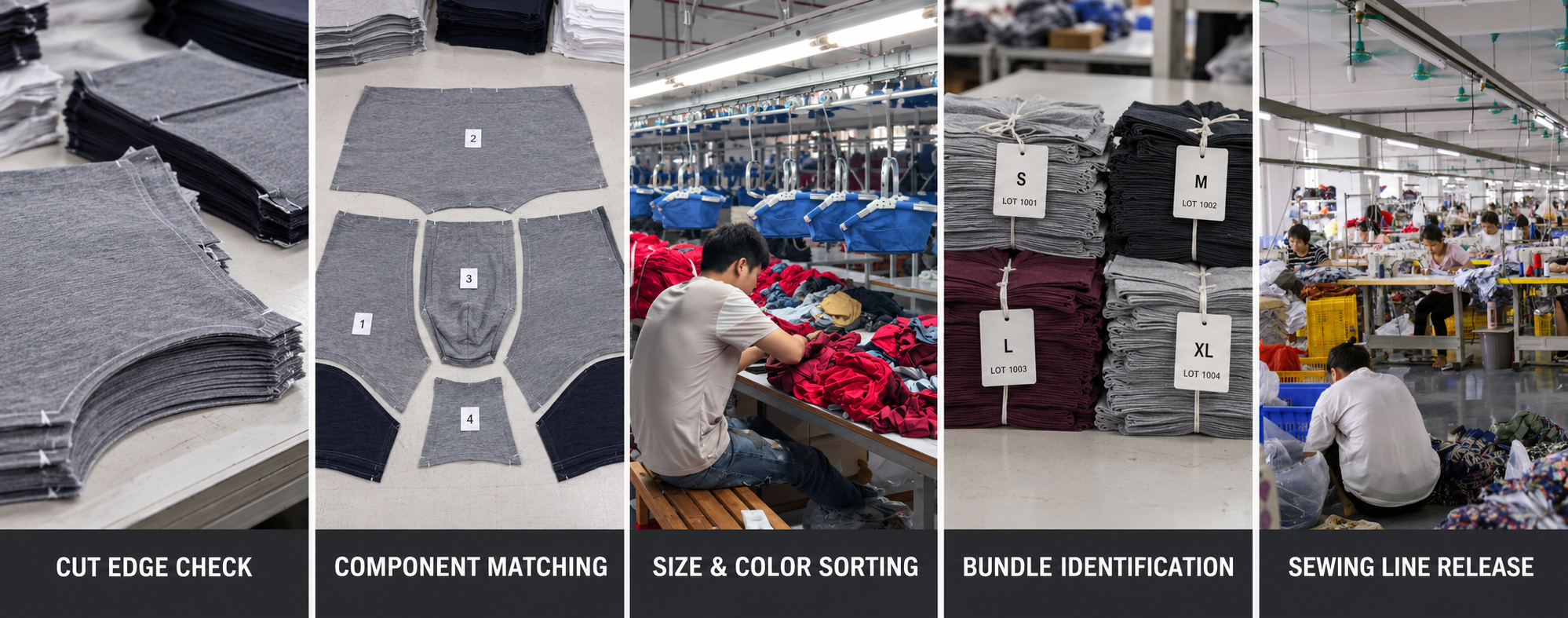 In-Process Checks Before Sewing
Cut panels are reviewed for visible defects, incomplete cuts, distorted edges, incorrect direction and missing components. Selected panels may also be compared with the pattern or approved measurement reference before the complete batch proceeds.
Checks normally focus on:
- Correct components and quantities for each garment
- Consistent size and panel shape
- Accurate notches and sewing reference points
- Proper fabric face and stretch direction
- Shade consistency within each bundle
- Separation of defective or contaminated panels
Approved bundles then move to the Sewing & Assembly Process, where seam construction, pouch assembly, leg openings and waistband preparation are controlled against the production reference.
How Cutting Details Affect Cost, MOQ and Lead Time
Fabric width, GSM, shrinkage allowance, pattern complexity, size assortment and order quantity all influence material consumption and cutting efficiency. Styles with multiple panels, contrast colors, directional prints or special pouch structures require more preparation and separation than standard solid-color designs.
MOQ may also be affected by minimum fabric quantities and color-lot requirements rather than cutting alone. Lead time can increase when new patterns, revised grading, custom-printed fabric or several small color and size batches are required.
Information Needed for Cutting Review
For an accurate feasibility and quotation review, buyers should provide the tech pack or reference sample, fabric specification, size chart, grading rules, order quantity by color and size, construction details and any panel placement requirements.
Fibrena Underwear reviews these details before sample approval and bulk production. Once the specification is confirmed, the approved sample and cutting references help maintain consistency from the first production bundle through the final order.