


Why Waistband Specifications Matter
The waistband is both a functional component and a visible branding area on boxer briefs, trunks and briefs. Its width, elasticity, recovery, softness, logo repeat and attachment method can affect fit, comfort, appearance and repeat-order consistency.
Before sample development, Fibrena Underwear reviews the waistband specification together with the garment construction and size chart. A waistband should not be selected by appearance alone. Its tension must work with the fabric stretch, waist measurement and intended fit of the finished underwear.
Buyers developing new dimensions or grading rules should confirm them through Custom Size & Fit Development before the waistband circumference is released for bulk production.
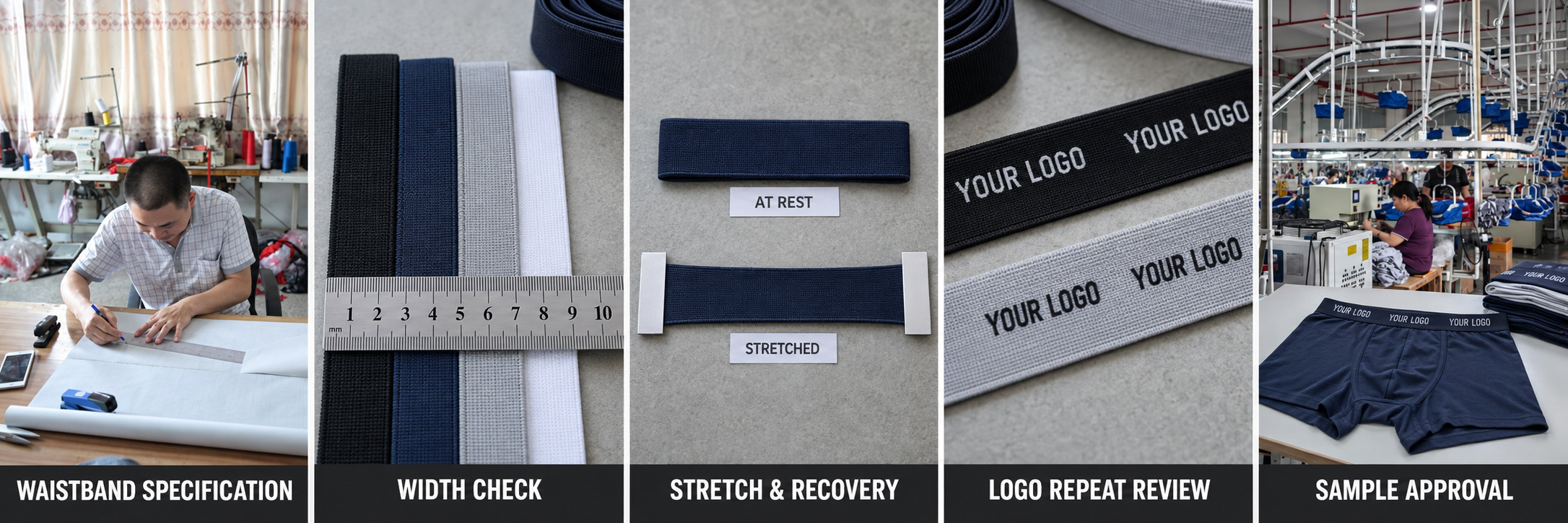 Width, Structure and Elastic Recovery
Common waistband specifications include the finished width, thickness, weave structure, stretch direction, recovery and surface hand feel. These details influence how the waistband sits against the body and how it performs after repeated stretching.
The selected elastic should recover without remaining excessively extended. A waistband that is too tight may distort the upper garment or create an uncomfortable fit. If it is too loose, the finished underwear may not maintain the intended waist position.
Cotton, modal, bamboo-derived fiber and polyester/spandex bodies can have different stretch and recovery characteristics. The waistband and body fabric therefore need to be evaluated as one construction during sampling.
Logo Artwork and Repeat Confirmation
For branded elastic waistbands, buyers should provide vector artwork together with the required logo size, color and repeat direction. The review normally covers:
- Waistband width and usable branding area
- Logo height, spacing and repeat length
- Ground color and artwork color
- Front, side or continuous repeat positioning
- Joining-point appearance
- Color reference or Pantone target where applicable
Artwork that is too detailed for the selected waistband width may lose clarity. Small text, narrow lines and complex color combinations should be assessed before sampling. Further branding options are explained on the Custom Logo & Branding page.
Sample Development and Approval
A waistband sample or complete underwear sample is prepared according to the agreed specification. Buyers should review the actual elastic rather than approving only a digital artwork.
Approval should cover logo appearance, color, elasticity, softness, width, joining method and compatibility with the underwear body. The completed sample also allows the buyer to evaluate waistband pressure, garment gathering and finished waist measurement.
If artwork, elasticity or dimensions change after approval, another sample may be required. Such revisions can affect material ordering, MOQ and production timing.
Waistband Preparation and Attachment
Before attachment, waistband lengths are prepared according to the approved size specification. The ends are joined, and the joining point is checked for security and excessive bulk.
During the Sewing & Assembly Process, the elastic is distributed around the garment opening. Operators control alignment and tension to reduce twisting, uneven gathering or distortion. Logo orientation and repeat position are also checked against the approved sample.
Different constructions may use exposed elastic, covered elastic or other specified applications. The sewing method must match the garment design and stretch requirements.
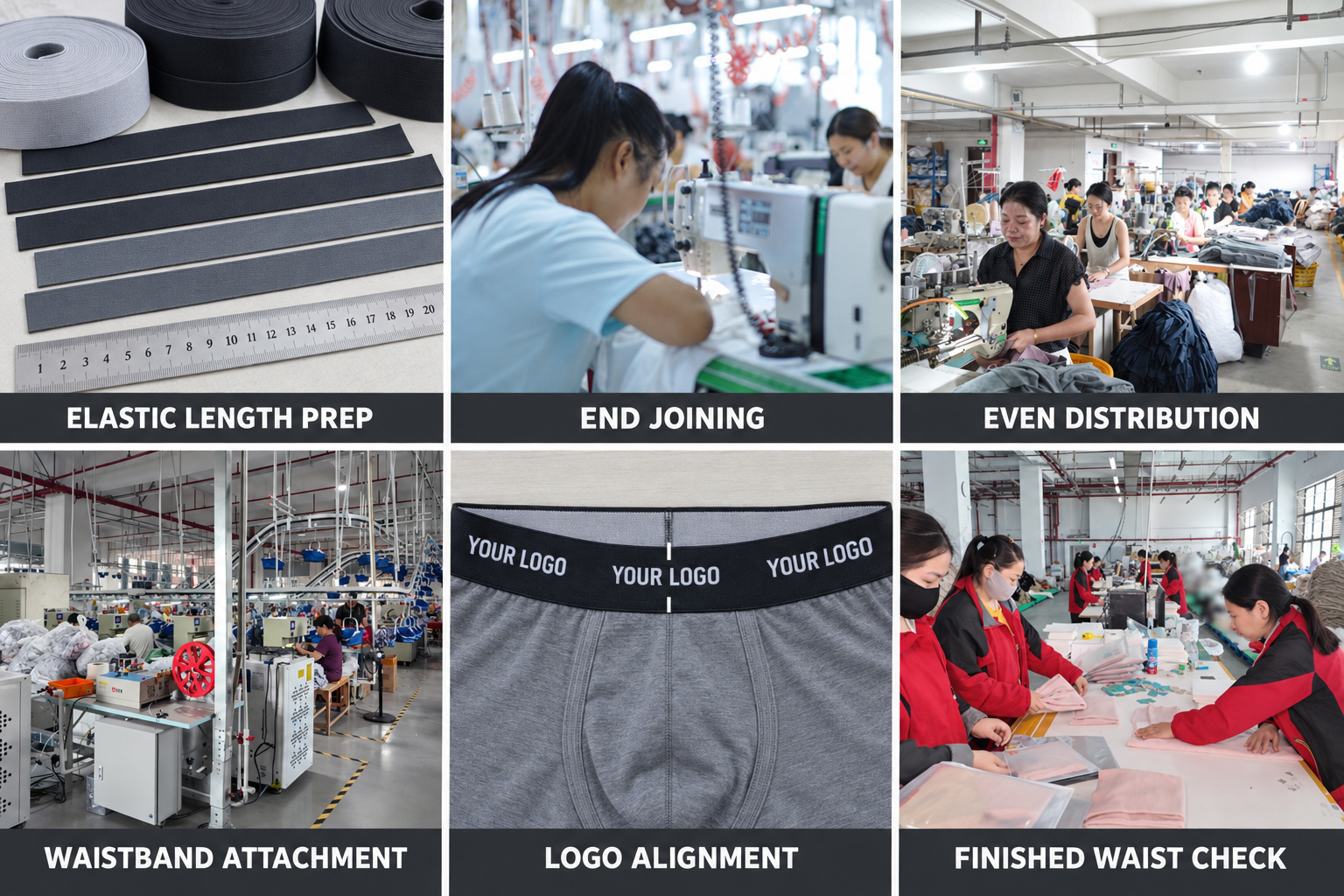 In-Line and Finished Waistband Checks
Quality checks during and after attachment focus on:
- Correct waistband width and color
- Elasticity and recovery against the approved reference
- Secure end joining and attachment stitching
- Even tension around the garment
- Straight alignment without twisting
- Correct logo direction and repeat position
- Balanced finished waist measurement
- Clean appearance without skipped stitches or damage
Waistband results are reviewed together with garment measurements and workmanship during Quality Inspection & Testing.
Effects on MOQ, Cost and Lead Time
A stock solid-color elastic usually involves fewer development variables than a custom jacquard or branded waistband. MOQ can be influenced by waistband construction, width, yarn color, logo repeat and the minimum production quantity required by the elastic specification.
Cost and lead time may increase for new artwork, multiple colors, unusual widths or several small SKU quantities. Buyers should provide the underwear style, size range, order quantity by color, waistband dimensions, logo artwork and color reference when requesting a quotation. Final feasibility, sample timing and MOQ are confirmed by project.