


Quality Control Against Approved Requirements
Men’s underwear quality inspection should follow an agreed product specification, approved sample and packing requirement. General descriptions such as “good quality” do not provide an objective standard for bulk production.
Before production, Fibrena Underwear confirms the fabric, size chart, construction, waistband, colors, labels, logo details and packaging. These references are used during material checks, in-line inspection and finished-product review.
The inspection scope is adjusted according to the style, material, order quantity and buyer requirements. Boxer briefs with complex pouch construction, branded waistbands or retail packaging may require different checkpoints from standard solid-color briefs.
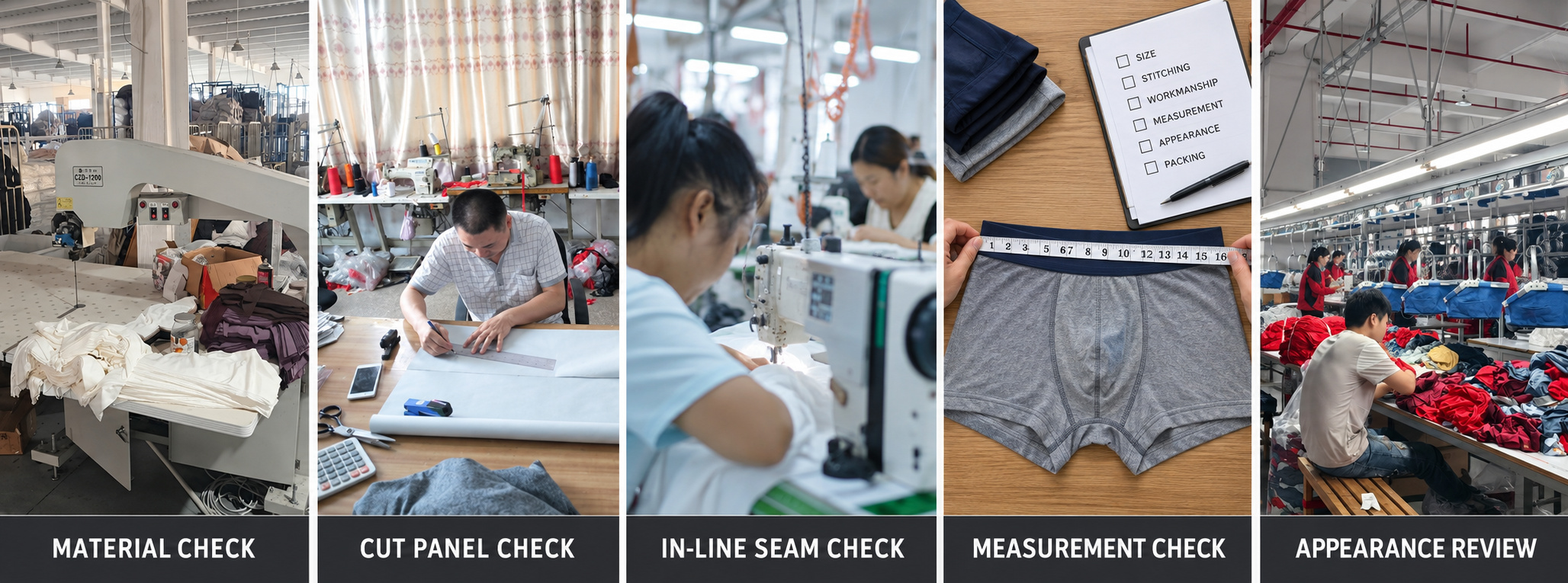 Incoming Material Inspection
Incoming fabric is checked against the approved order reference before cutting. Applicable checks may include composition information, color and shade, fabric width, hand feel and visible surface defects.
Rolls with noticeable shade differences should be identified and controlled to reduce color variation within the same garment or packing assortment. Waistband elastic, labels, hangtags and packaging materials are also compared with their confirmed specifications before use.
Material preparation and release are explained further on the Fabric Inspection & Material Preparation page.
In-Line Sewing and Assembly Checks
Inspection during production helps identify workmanship problems before the complete order reaches finishing. Checkpoints may cover:
- Correct front, back, pouch and gusset assembly
- Seam type and stitch consistency
- Skipped stitches, broken threads and open seams
- Puckering or excessive seam tension
- Balanced leg openings
- Waistband attachment and elasticity
- Label position and orientation
- Logo placement and visible application defects
Items requiring correction are separated before they proceed to the next operation. The specific sewing controls depend on the approved construction described in the Sewing & Assembly Process.
Measurement and Fit-Related Checks
Finished garments are laid flat and compared with the confirmed measurement specification. Important points can include the waist, front and back rise, hip width, leg opening, inseam and total length, depending on the style.
Measurements should follow an agreed method because different garment positions or fabric tension can produce inconsistent results. The buyer’s size chart should identify measurement points and permitted tolerances before sample approval.
Where a bulk measurement falls outside the confirmed requirement, the affected quantity is reviewed and separated as necessary. Fit itself is approved during sampling; bulk measurement checks verify whether production remains consistent with that approved reference.
Waistband, Logo and Label Inspection
The waistband is reviewed for width, joining security, even attachment, twisting, logo direction and repeat alignment. Its tension should remain consistent with the approved sample and finished waist requirement.
Printed or heat-applied logos are checked for placement, color, clarity and visible defects according to the approved artwork. Care labels, size labels and brand labels are checked for correct content version, position and orientation.
Projects with detailed branded elastic requirements should complete approval through Waistband & Elastic Application before bulk production.
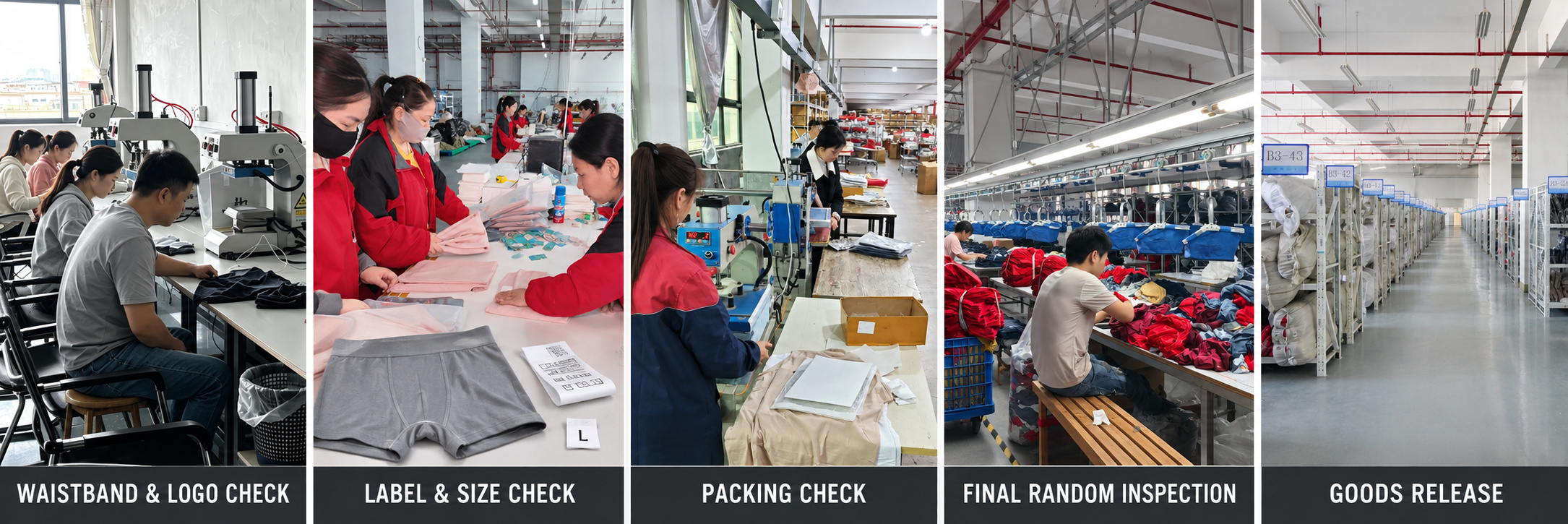 Finished Product and Packing Inspection
Finished-product inspection compares workmanship, measurements, color, waistband condition, labels and overall appearance with the approved reference. Needle detection can be applied where required by the order.
Packing checks may cover individual bags, paper packs, retail boxes, barcode and size labels, assortment ratios, carton quantities and shipping marks. Goods should not be released for shipment until the product and packing requirements have been reviewed.
Testing and Third-Party Inspection Support
Buyer-nominated inspection agencies or laboratories can be coordinated when required. Testing requests may include fabric composition, color fastness, shrinkage or dimensional stability, depending on the product and destination market.
Testing is not represented as automatic certification. The required test method, acceptance criteria, sample quantity, responsible party and timing should be confirmed before production or shipment. Third-party costs and lead-time effects are evaluated by project.
Information Needed to Define the QC Standard
For an accurate inspection plan, buyers should provide the approved sample, technical specification, measurement chart and tolerances, logo and label files, packaging instructions, testing requirements and any buyer-defined sampling criteria.
Standard bulk orders usually require around 25–35 days after sample approval and deposit confirmation. Inspection, laboratory testing or third-party booking should be included in the project schedule to avoid delaying shipment.