


Assembly Based on the Approved Production Reference
Sewing begins after fabric panels have been cut, identified and released by style, color, size and production lot. Each bulk order follows the approved sample, confirmed construction details and size specification rather than relying only on a product photo.
For boxer briefs, trunks and briefs, the assembly sequence may cover pouch construction, front and back panel joining, crotch or gusset attachment, side seams, leg openings, waistband application, labels and final thread trimming. The exact sequence depends on the garment structure and selected fabric.
Panels must first pass through the Cutting & Panel Processing stage so matching points, stretch direction and component bundles are ready for sewing.
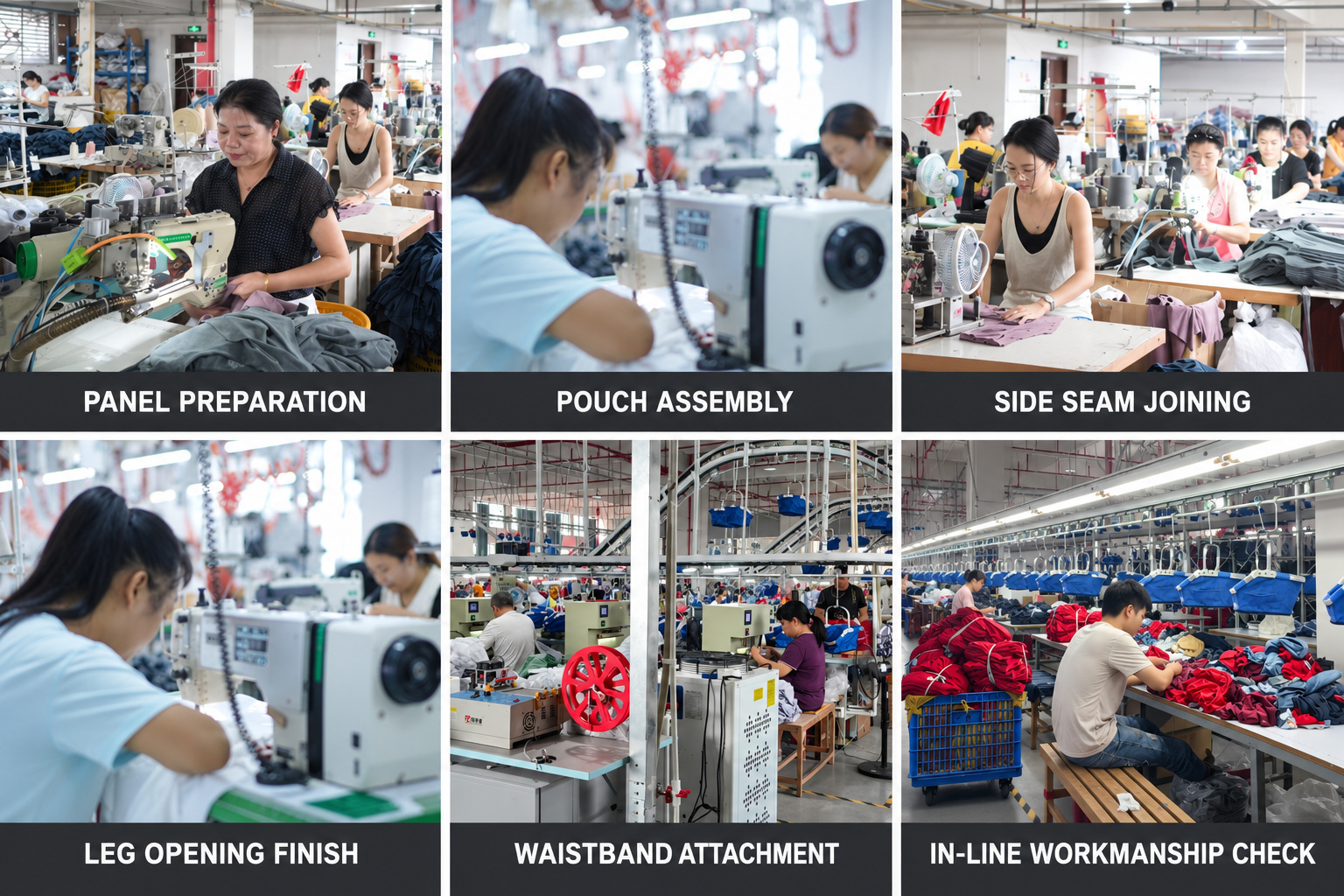 Panel Matching and Pouch Assembly
Operators check that each bundle contains the correct front, back, pouch and gusset components before sewing. Panels from different colors, sizes or fabric lots should not be mixed within the same garment.
Pouch construction requires particular attention because its panel shape and seam position affect support, internal comfort and finished appearance. Curved seams should remain smooth without twisting, excessive tension or uneven seam allowance. If a style uses a double-layer pouch, mesh insert, fly opening or contrast panel, the component order must be clearly defined in the approved construction reference.
Incorrect panel orientation at this stage can affect the fit of the complete garment and may not be fully corrected during finishing.
Seam Construction and Stitch Selection
Fibrena Underwear uses industrial sewing, overlock and flatlock equipment where required by the product construction. Stitch type is selected according to fabric stretch, seam location, target appearance and wearer contact.
In-line checks focus on skipped stitches, broken threads, puckering, uneven seam width and insufficient seam coverage. Stretch fabrics also require controlled thread tension so seams can extend with the garment without becoming loose or restrictive.
Cotton, modal, bamboo-derived fiber and polyester/spandex fabrics do not always behave the same way during sewing. Fabric thickness, elasticity and recovery may require adjustments to stitch density, needle selection and machine tension before stable bulk production is reached.
Leg Openings, Labels and Component Placement
Leg openings may be finished with folded hems, binding, elastic or other approved constructions. Both sides are compared for balance, and the finished opening should follow the measurement and stretch requirements confirmed during sampling.
Care labels, size labels and brand labels are attached in the approved position and orientation. Buyers should confirm label content, dimensions, folding method and placement before production because late label changes can interrupt the sewing schedule or require rework.
Private label projects involving branded labels or additional garment details should coordinate these specifications through Private Label Underwear before bulk assembly.
Waistband Application and Alignment
The waistband is prepared to the specified width, circumference, elasticity and logo repeat. During attachment, the elastic must be distributed evenly around the garment to avoid twisting, uneven gathering or excessive tension.
Logo position and waistband joining points are reviewed against the approved sample. For continuous branded waistbands, artwork spacing and repeat placement should be agreed before waistband production. More detail is available on the Waistband & Elastic Application page.
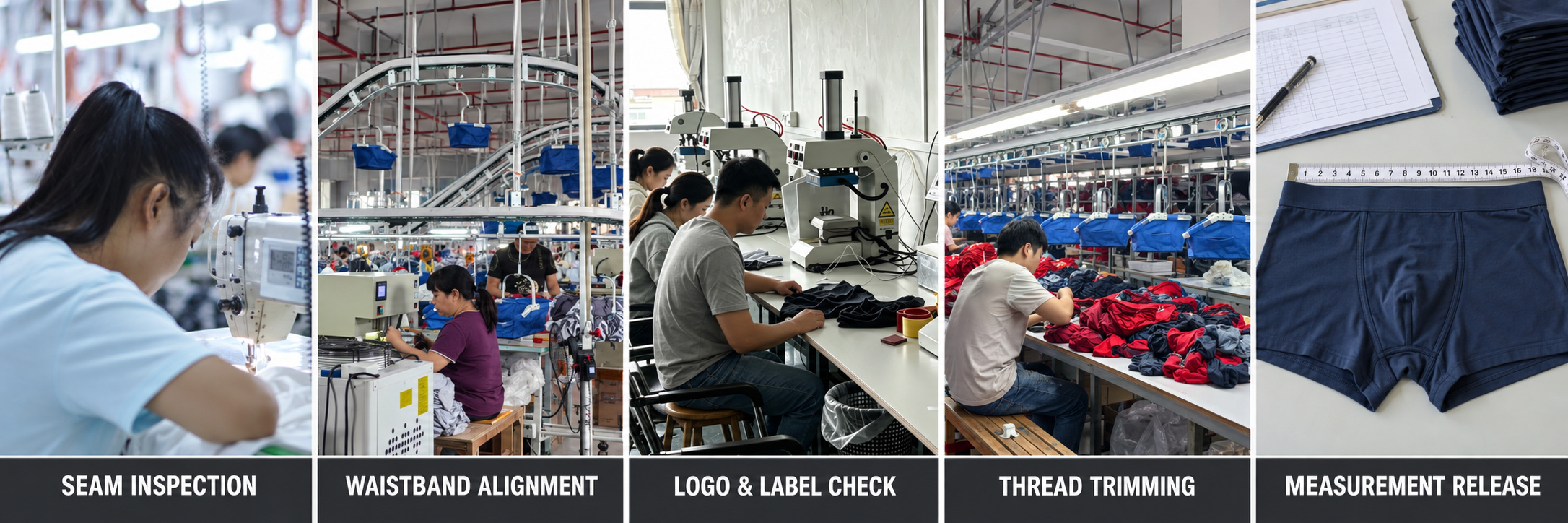 In-Line Workmanship Inspection
Inspection is performed during assembly rather than waiting until every garment is finished. Typical checks include:
- Correct panel and component matching
- Consistent seam type and stitch density
- Secure pouch, gusset and side-seam assembly
- Balanced leg openings
- Proper waistband tension and alignment
- Correct label position and orientation
- Absence of skipped stitches, holes and severe puckering
Nonconforming pieces are separated for correction or review before they proceed to finishing and packing.
Information Needed Before Bulk Sewing
Buyers should confirm the approved sample, size chart, fabric, seam construction, pouch structure, waistband specification, label placement, color breakdown and order quantity by size.
Standard bulk orders usually require around 25–35 days after sample approval and deposit confirmation. More complex private label programs may require around 35–45 days depending on materials, construction and packaging. Final timing is evaluated against the complete specification and order schedule.